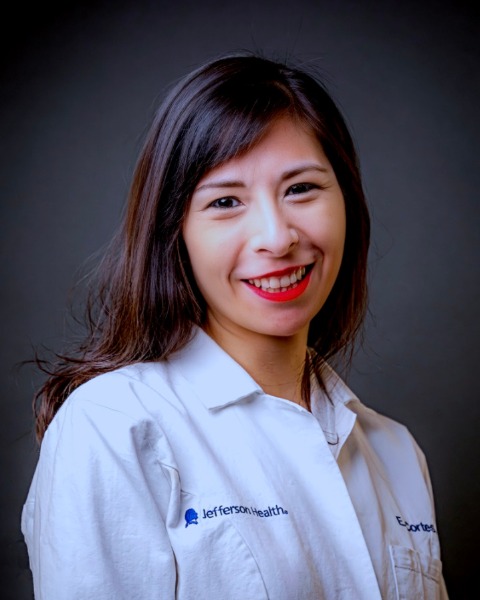
New Jersey may not be the first state one thinks of when it comes to agriculture, but approximately 4,000 to 6,000 migrant farm workers come to Southern New Jersey every summer. Emma Cortes, DO, a global emergency medicine fellow at Brown University, is the founder and director of the Migrant Health Collaborative of South Jersey. Her work and research focus on increasing access to healthcare for migrant workers.
There are a number of barriers for migrant workers trying to get healthcare. Workers move frequently from state to state, without enough time to establish care with a primary care doctor or to follow up with a care plan. They are typically on H-2A visas, from countries like Guatemala, Haiti, Jamaica, and Mexico. Often, they start in Florida and move north, following the harvest seasons.
The farms are generally located in geographically isolated rural areas, and migrant workers rarely have their own transportation. Even in relatively urbanized New Jersey, the farms are located in areas with mostly dirt roads and often no cell phone or Internet service. This isolation means telemedicine is also impractical.
In South Jersey, there are a lot of resources to help people. However, migrant workers are often not aware of these resources, and even when they are, they can’t travel to access them. After spending some time on the farms and with migrant worker communities, Dr. Cortes realized that part of the problem was the framing. Rather than asking how they could get people to the places where those resources are, they should be asking, “How can we bring these resources that exist out to the middle of nowhere?”
Bringing Care to the Farm
Dr. Cortes started volunteering with Migrant Worker Outreach in 2020. Initially, her aim was just to spend time on the farms, listen to people, and see what was needed. At first, she simply helped hand out donations while getting to know the communities. There were many subtleties to working with this population that needed to be learned on the ground. For instance, “A lot of these farms don’t have addresses—you can’t just plug it into GPS and go there. You have to know where to turn and which road to go down.”
Different housing may serve different demographics, and language barriers can be significant. One of the challenges groups faced was finding translators for Haitian Creole, the language spoken by the majority of these South Jersey farm workers.
Eventually, Cortes began offering basic health care. “One day I came with my blood pressure cuff, and I asked if anyone wanted their blood pressure checked. When I looked up there was a line of about 15 to 20 people. They were all asking simple questions that we would typically be asked in a primary care visit.”
Dr. Cortes expanded these small experiments into an organized program. In the summer of 2024, Migrant Worker Outreach did three different screening events at three different farms. “Instead of trying to move all these people off the farm, it makes much more sense to bring quality care to the farm,” she says.
At these events, they offered basic medical care like taking vital signs and doing point of care testing for glucose, while also bringing donations like clothing, diapers, and formula. Everyone could receive the donated items regardless of participation.
After participants got their vital signs and point of care testing, they would then have the option to talk to a physician. “For many people, they may go years without speaking with a physician,” Cortes said.
Patients could also be screened for diabetes, hypertension, hyperlipidemia, and obesity. One event included a mammography machine. A partner organization did STD screenings—providers followed up with the results, and if antibiotics were needed they would deliver them to the farm.
According to the surveys collected at the screening events, most workers did not have insurance, higher than Department of Agriculture estimates. Most had less than a high school diploma, and for about half, migrant farm work is their main source of income. The age ranges served were 5 to 77, with the majority around 40 years old.
Health Concerns of Migrant Workers
Migrant agricultural workers face a number of health hazards. These may include poverty and insufficient support systems, inadequate or unsafe housing, limited availability of clean water and septic systems, inadequate healthcare access, and cultural and language barriers. Their work also exposes them to specific occupational hazards, such as pesticide poisoning, musculoskeletal injuries from machinery, and a higher rate of hypertension and diabetes.
Despite these unique risk factors, the concerns brought up by patients at the screening clinics tended to be fairly simple. They had basic questions or needed their medication refilled. “It’s very low hanging fruit, nothing complicated going on, they just want some basic patient education,” says Dr. Cortes.
In New Jersey, migrant workers are in the state for two months or so, creating challenges for follow-up care. Because some of these events included cancer screenings, the organizers need a plan for what to do if cancer was indicated. For this, they worked with a hospital partner who was briefed on the needs of this community. Translators provided education on what the patients needed to do in the future, even if obtaining follow-up care before the patients moved on would be difficult
“Although we can’t establish continuous care, we can continue to treat chronic conditions that already exist and connect people with local clinics,” said Cortes. “Even just having medication refills is important and can be impactful.”
Expanding Programs Nationwide
These screening events have served as a proof of concept that care can successfully be brought to the farm, and Cortes hopes to expand them in the future. For those wanting to do similar work in their states, Cortes encourages them to first understand what is already being done. “Everybody in any state has some form of academic, community, and clinical partners that you can try to collaborate with. Migrant Worker Outreach works with a wide variety of academic, community and nonprofit, and clinical partners.
Dr. Cortes encouraged those interested in helping this and other vulnerable populations to think outside the box and come up with creative solutions for how to offer care. “Help people in the way that they want to be helped,” she said.
Dr. Cortes’s full session from ACOFP ‘25, Migrant Worker Healthcare: What We've Learned From the Fields, is available on demand through ACOFP’s eLearning platform. Purchase access to the full convention or specific bundles to earn up to 38 AOA or AMA credits.