Bonyo Bonyo, DO, is an osteopathic family physician who lives in Akron, Ohio. He was born in an area of Kenya with no access to healthcare. After his mother and sister passed away, he made a promise to build a clinic in that area and created a nonprofit: Bonyo's Kenya Mission. Dr. Bonyo kept his promise and built a permanent facility, named after his mother, in an otherwise unserved region of rural Kenya. 2026 marks their 30th anniversary. It is open daily, and patients can get inpatient and outpatient care, deliver a baby, obtain medications for HIV, and more. A collaboration with Kansas City University (KCU) began about ten years ago, and groups from KCU have returned twice a year every year since, with the exception of COVID times.
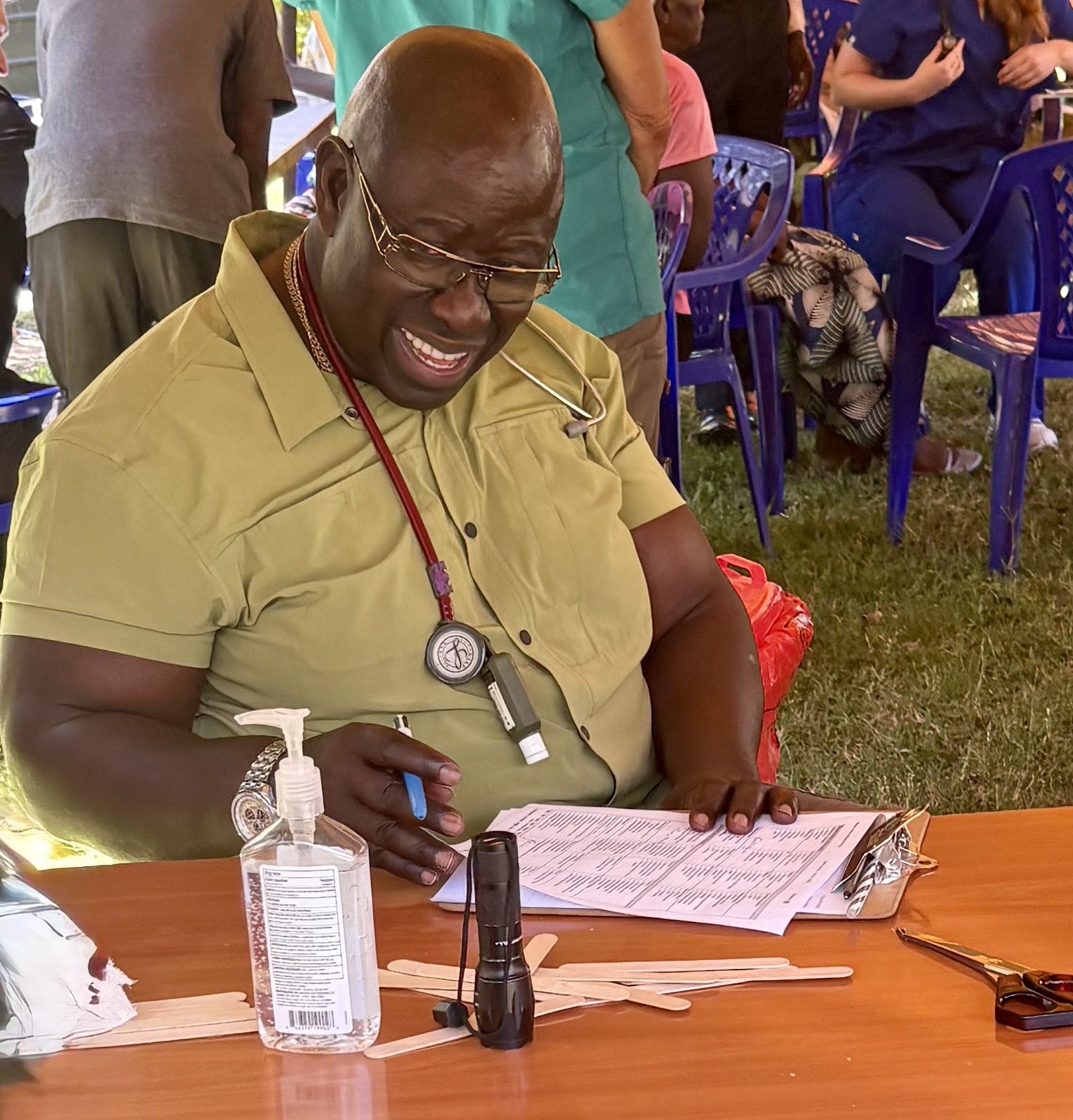
Dr. Bonyo Bonyo at Bonyo's Kenya Mission
2025-2026 ACOFP President Gautam Desai, DO, FACOFP dist., recently returned from Kenya, on one of many trips he has led in collaboration with Bonyo's Kenya Mission. This clinic and other missions like it serve as an example of the many ways osteopathic family physicians can make a difference not only locally, but internationally.
Dr. Desai’s involvement with global health outreach began when he raised his hand to go on a trip to Guatemala over 25 years ago. He never imagined that this trip would go on to shape a major part of his career. He now leads 4 trips per year, and is a strong advocate of all students having access to global health experiences.
Making an Impact with Osteopathic Principles
Over the past 30 years, Bonyo “has provided employment to so many people in the village as well as healthcare,” said Desai. It has been particularly rewarding for Desai to see children growing up over the past 10 years and start their careers, illustrating the impact a single osteopathic physician can make. Dr. Bonyo’s organization also provides scholarships to students in Kenya, many of whom would otherwise not be able to attend school as it is not free after a certain age.
Dr. Desai was born in India, where he describes the healthcare system as “kind of pay for play, just like it is in most of the world, so if you don't have resources, you will not be seen.” This makes it particularly crucial to bring the osteopathic philosophy of preventing illness to areas with limited resources.
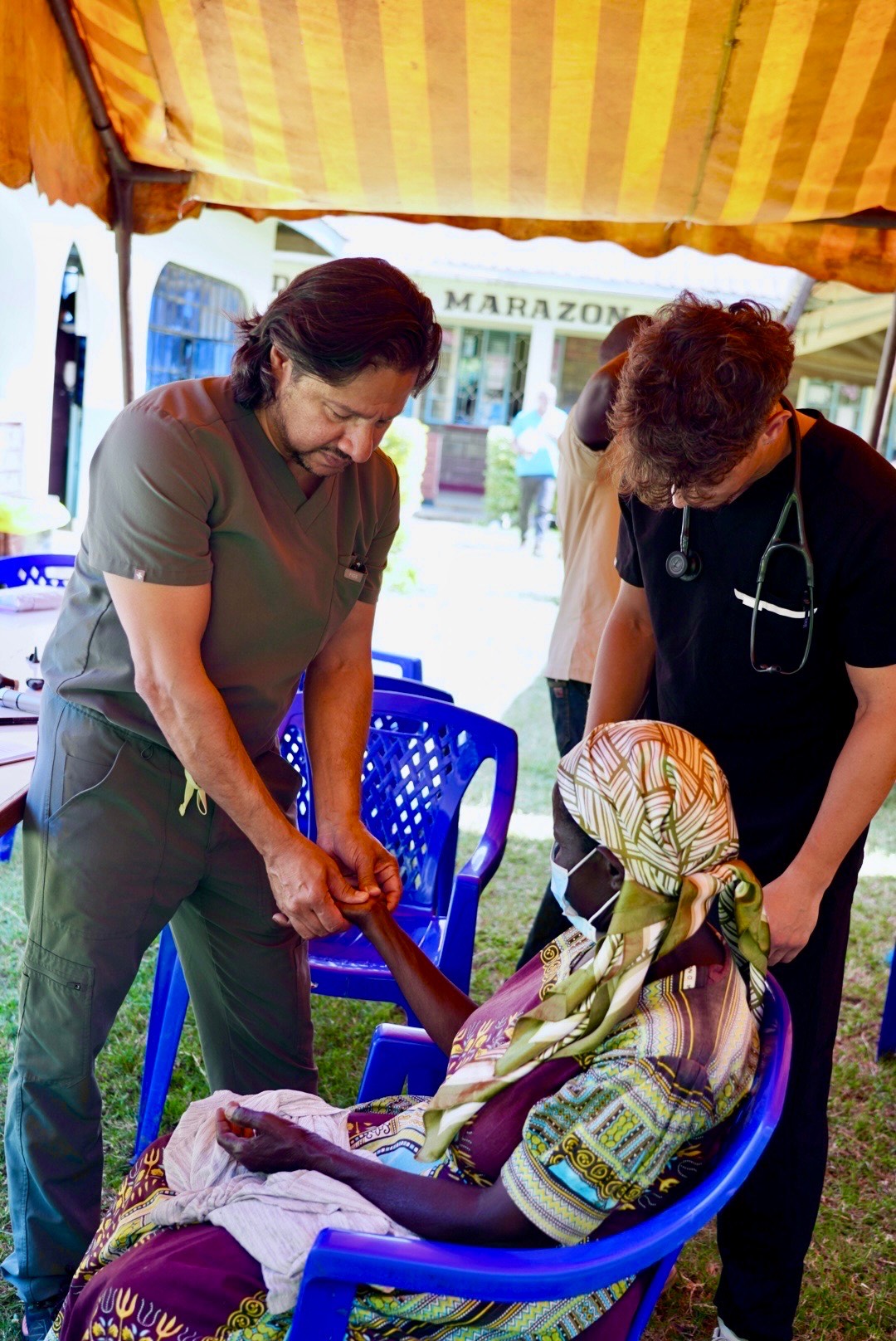
Dr. Desai performs OMT on a patient in Kenya
Global missions also benefit from the use of osteopathic manipulative treatment. For example, patients in Guatemala (another country KCU groups visit regularly) who weave or make tortillas for a living are susceptible to carpal tunnel syndrome, as are people in Kenya who harvest rice. “As DOs, we can do osteopathic manipulation and teach them stretches and things they can do at home that help them,” says Dr. Desai. Having OMT as another tool in their belt in addition to treatments like medication or surgery helps DOs impact more patients.
The Ripple Effect of Compassion
Due to the rigors of osteopathic medical school, it can be difficult to participate in global outreach. Dr. Desai says, “The hardest trip is the first one.” While it can be challenging to find time for and pay for a trip, after people join once, they often come back again and again. “We have so many alumni return as attendings, teach our students, and serve as mentors.” At KCU, between 15-20% of students participate in the global health program before they graduate.
Making the leap is worth it. The experiences gained, the lives touched, and the perspectives shifted are invaluable. Dr. Desai encourages students to get involved in medical missions while still in school, elaborating on the many advantages. First, such trips help students gain a deeper understanding of global health challenges. It can be eye-opening for medical students, some of some of whom have never traveled much further than their home state, to see what life is like for most of the world, with widespread poverty. They learn to work with limited resources, using their eyes, ears, and hands to make diagnoses, and provide care under challenging circumstance. In addition, they gain practice in OMT and enhance their clinical skills—for instance, in Kenya, students become very good at diagnosing malaria.
And, of course, there is the opportunity to make a major impact on patients’ lives by providing needed help or preventing worry. “For example, we had a patient who thought they had cancer because they had a lump, but it turned out to be a cyst. It was really rewarding to have the student be able to tell the patient that, ‘Oh, you don't need to worry about that.’”
Missions as Part of an Osteopathic Career
Dr. Bonyo’s work and the KCU program are also examples of the almost endless variety of ways osteopathic family physicians can shape their practice to fit their values and create the kind of impact they find most important. In Dr. Bonyo’s Ohio practice, he has done inpatient care, outpatient care, and worked in nursing homes. He’s combined this wide-ranging practice with giving back to his home village in Kenya through the mission.
For Dr. Desai, medical missions are part of his career as an academic, a career that has often centered on teaching and mentorship. Dr. Desai finds it particularly satisfying when students come back at later stages int their careers and mentor students themselves, allowing him to see the circle of life: where they started as a third- or fourth-year medical student, and now are teaching students of the next generation.
The Journey Begins with You
The work of Bonyo’s Kenya Mission and those of many others providing care to underresourced areas around the globe challenge us to think globally, act locally, and always remember the profound difference we can make--one patient, one community at a time.
Will you answer the call?
Follow the work of Bonyo's Kenya Mission on Instagram.